Can I Change My Company Name After Incorporation in Malaysia?
Your business has grown, rebranded, changed direction, or maybe you simply picked a name at incorporation that no longer fits. Whatever the reason, many Sdn Bhd owners eventually ask the same question: is it actually possible to change a company’s registered name after incorporation, and how complicated is it?
The good news is yes, it’s entirely possible, and it doesn’t create a new company or disrupt your business’s legal history. But there is a formal process to follow with Suruhanjaya Syarikat Malaysia (SSM), and skipping steps or missing deadlines can cause real problems with banks, contracts, and regulators. Here’s how the process works, what it costs, and what SME owners commonly get wrong.
Yes, You Can Change Your Company Name
Under Section 28 of the Companies Act 2016, a company may change its name by passing a special resolution. This means the decision must be approved by shareholders, not just the directors, and typically requires at least 75 percent shareholder approval, since a special resolution has a higher threshold than an ordinary resolution.
Changing your company’s name does not create a new legal entity. Your company registration number stays the same, and all your existing contracts, licenses, assets, and legal obligations continue under the new name. This is an important distinction from setting up a brand new Sdn Bhd, which would mean starting from zero.
The Company Name Change Process
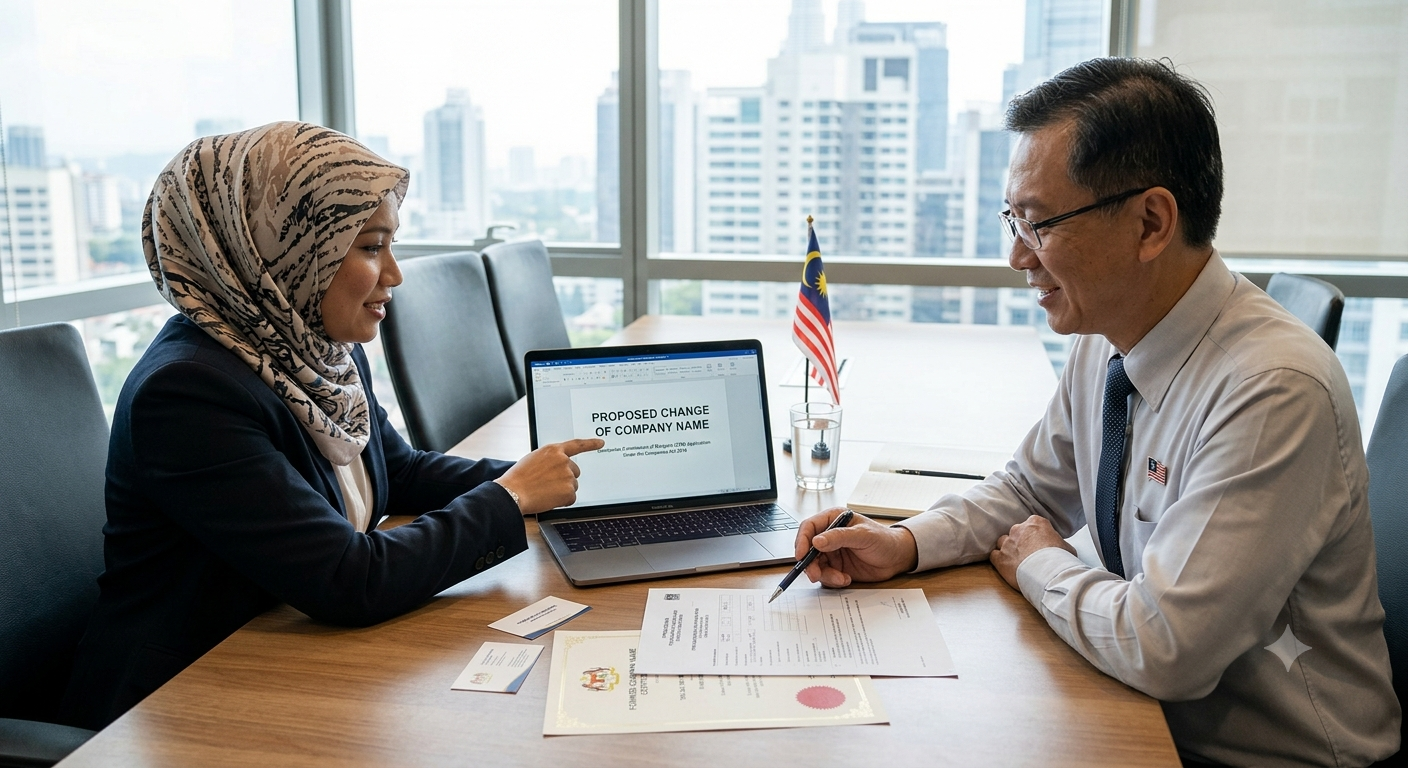
Here’s how a name change is typically carried out with the help of a company secretary:
- Check name availability. Before anything else, the proposed new name needs to be searched and reserved with SSM to confirm it isn’t already taken, restricted, or too similar to an existing registered name.
- Reserve the new name. Once available, the name reservation fee is RM50, and the reservation typically holds the name for 30 days.
- Pass a special resolution. The shareholders must formally approve the name change by special resolution. If the company has adopted a constitution, this may need to be done through an Extraordinary General Meeting (EGM), depending on what the constitution requires.
- Lodge the Section 28 application with SSM. The company secretary submits the special resolution together with the Section 28 application and the RM100 filing fee.
- Receive the Section 28 notice. SSM typically issues the Notice of Change of Name within a few working days of a complete and compliant submission, confirming the new name and its effective date.
Total SSM fees for a straightforward name change usually come to around RM150 (RM50 for name reservation plus RM100 for the change application), on top of any professional fees charged by your company secretary for preparing resolutions and handling the lodgment.
This is where a company secretary can help. Preparing the resolutions correctly, checking name compliance in advance, and lodging everything within the required timeframes is exactly the kind of statutory work that’s easy to get wrong when done without experience.
What Happens After the Name Change Is Approved
Getting SSM’s approval is not the end of the process. A few important obligations follow:
- Display both names for 12 months. For at least 12 months from the date of approval, your company must show both the old and new names on official documents, invoices, letterhead, and your website, usually written as “New Name Sdn Bhd (formerly known as Old Name Sdn Bhd).”
- Update your bank. Banks need to be notified so your accounts, cheque books, and records reflect the new name.
- Update LHDN, EPF, and SOCSO. Your tax profile with Lembaga Hasil Dalam Negeri, along with your EPF and SOCSO employer profiles, need to be updated with the new company name.
- Update licenses and permits. Any business licenses, permits, or industry-specific approvals tied to the company name will need to be amended with the relevant authorities.
- Update contracts and stakeholders. While existing contracts remain legally valid under the new name, it’s good practice to notify clients, suppliers, and landlords of the change.
Common Mistakes SME Owners Make
- Assuming the process ends once SSM approves the name. The Section 28 notice is only the starting point. Failing to update banks, LHDN, EPF, and SOCSO can create mismatches that cause delays in payments, tax filings, or statutory contributions.
- Forgetting the 12-month dual-name display requirement. Removing the old name from documents too early is a common compliance slip that owners don’t realise applies to them.
- Not checking name availability properly before the EGM or resolution. Passing a resolution for a name that later gets rejected by SSM means repeating the internal approval process.
- Believing a name change requires re-incorporation. It doesn’t. The company number, tax file, and all legal history remain intact, so there’s no need to re-register the business from scratch.
- Delaying the update of licenses and permits. Operating under a new company name while your licenses still show the old one can create problems during audits or regulatory checks.
Frequently Asked Questions
Does changing my company name affect my company registration number? No. Your company registration number stays exactly the same. A name change does not create a new legal entity or reset your company’s history with SSM.
How much does it cost to change a company name in Malaysia? SSM fees typically total around RM150, made up of RM50 for the name reservation and RM100 for the Section 28 application. Company secretary service fees for preparing resolutions and handling the lodgment are separate.
How long does the SSM approval process take? Once a complete and compliant application is lodged, SSM typically issues the Notice of Change of Name within a few working days. The name reservation itself is valid for 30 days, so the resolution and lodgment need to happen within that window.
Do existing contracts still apply after a name change? Yes. Since the company remains the same legal entity, all existing contracts, agreements, and obligations continue to apply under the new name.
Do I need to inform LHDN and other authorities after changing my company name? Yes. You’ll need to update your profile with LHDN, EPF, and SOCSO, notify your bank, and update any licenses or permits tied to the company name to avoid mismatches in your records.
Final Thoughts
Changing your company name in Malaysia is a well-defined, manageable process, as long as the correct approvals, resolutions, and SSM filings are handled properly and followed through with the relevant authorities afterward. The legal work is straightforward on paper, but the follow-through with banks, LHDN, licenses, and stakeholders is where most of the actual effort lives.
If you’re planning a rebrand or name change for your company, our team at iComSec can manage the entire process for you, from name reservation through to updating your statutory records with SSM and other authorities. Get in touch for a consultation and make your transition to a new name smooth and fully compliant.
Can I Change My Company Name After Incorporation in Malaysia?

Recent Posts